Building a game is a marathon, and your choice of engine determines whether you’re running in high-tech sneakers or heavy work boots. If you want to turn a vision into a reality without getting buried in code, you need a powerhouse framework that does the heavy lifting for you. Besides, in this blog you will see a refreshed look at what best game engines 2026 are and why they are the heartbeat of the industry.
What Exactly is the Best Game Engine 2026?
Think of a game engine as the ultimate digital workshop. Instead of building every single hammer, nail, and saw from scratch, developers use this pre-built framework to construct their worlds.
It is a specialized software suite that handles the “invisible” heavy lifting, including:
Visual Rendering: Bringing 2D and 3D art to life.
Physics Simulations: Ensuring objects fall, bounce, and break realistically.
Scripting: Defining the rules of how players interact with the world.
Asset Management: Organizing thousands of sounds, textures, and animations.
Essentially, the engine provides the skeleton so you can focus on the skin, soul, and story of your game.
Why Your Choice Matters
Choosing an engine isn’t just a technical box to check; it is a strategic business move. Here’s why this decision carries so much weight:
1. Speed and Efficiency
First and foremost, engines save time. Because, you aren’t writing code for basic gravity or light reflections, your team can jump straight into level design and storytelling. Consequently, this shorter development cycle gets your product to market faster.
2. Scalability and Success
Whether you are an indie dev or a AAA studio, your engine must grow with your ambitions. A great engine allows you to build for one platform (like PC) and easily port your game to others (like consoles or mobile). As a result, your potential audience—and your revenue—increases exponentially.
3. Freedom to Create
Most importantly, a solid engine removes technical barriers. When the “math” of the world is handled automatically, developers have the breathing room to experiment, iterate, and innovate. Ultimately, the right engine doesn’t just help you build a game; it helps you build a masterpiece.
Best Game Engines 2026
Unity Game engine
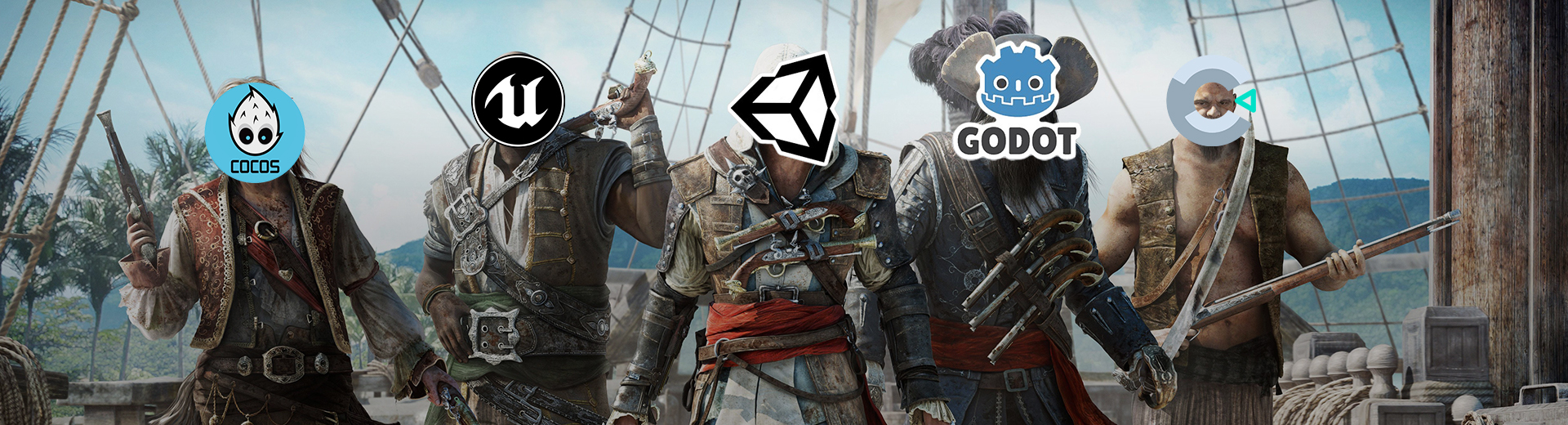
Unity is a versatile and widely used game engine that supports both 2D and 3D game development. Known for its user-friendly interface and extensive asset store, Unity is a top choice for developers ranging from beginners to seasoned professionals.

Key Features
- Cross-Platform Development: Develop games for multiple platforms including PC, consoles, mobile, and VR.
- Asset Store: Access a vast library of pre-made assets to speed up development.
- ·Community and Support: Benefit from a large community and extensive documentation.
Unreal Game Engine
Unreal Engine, developed by Epic Games, is renowned for its high-fidelity graphics and powerful features. However, it is a preferred choice for AAA game development, offering unparalleled tools for realistic rendering, physics, and animation.

Key Features
- High-Fidelity Graphics: Create visually stunning games with real-time rendering and photorealistic quality.
- Blueprint Visual Scripting: Simplify game development with a visual scripting system that doesn’t require coding.
- VR/AR Support: Build immersive VR and AR experiences with robust support and tools.
Godot game engine
Godot is an open-source game engine supporting 2D and 3D game development. Also, it features a unique scene system and a user-friendly scripting language (GDScript), making it an excellent choice for developers seeking flexibility and control.
Key Features
- Open-Source: Completely free and open-source, allowing for extensive customization and community contributions.
- Scene System: Organize game elements efficiently with Godot’s intuitive scene system.
- Multi-Platform Support: Export games to multiple platforms including Windows, macOS, Linux, Android, and iOS.
Cocos game engine
Cocos is an open-source game engine optimized for 2D game development. Moreover, it’s lightweight and efficient, making it ideal for mobile games. Cocos provides a range of tools and resources to streamline the development process.

Key Features
- Lightweight and Efficient: Optimized for performance, particularly on mobile platforms.
- Comprehensive Tools: Offers a wide range of development tools and resources.
- Large Community: Supported by a strong community that contributes to its continuous improvement.
Construct game engine
Construct is a user-friendly game engine focused on 2D game development. Besides, this is popular among indie developers and educators for its drag-and-drop interface and visual scripting capabilities, enabling rapid prototyping and development without extensive programming knowledge.
Key Features
- Drag-and-Drop Interface: Simplifies game development with a visual approach.
- Visual Scripting: Develop games without writing code, using intuitive visual scripting tools.
- Rapid Development: Accelerate development cycles with quick iteration and prototyping.
Importance of Best Game Engines 2026
- Efficiency: Game engines streamline the development process, allowing developers to focus on creativity and design.
- Quality: High-quality tools and features ensure the creation of polished and professional games.
- Cross-Platform: Many engines support multiple platforms, enabling developers to reach a wider audience.
- Community Support: Strong communities provide support, resources, and knowledge sharing, which can be invaluable for both novice and experienced developers.
- Scalability: From small indie projects to large AAA titles, these engines cater to a wide range of development needs.
Compare the Top Game Engines at a Glance
To help you navigate the technical and financial landscapes of 2026, the following table compares the industry’s leading frameworks across critical performance metrics.
The Ultimate Game Engine Checklist
Choosing the right and the best game engines 2026 is the most consequential decision you will make, as it acts as the foundation of your digital world. To ensure a seamless launch and avoid technical nightmares, evaluate your options using this strategic checklist:
Define Your Project Scope: First, determine your game’s complexity. While a lightweight powerhouse like Cocos is ideal for 2D mobile puzzles, the unmatched graphical fidelity of Unreal Engine is necessary for hyper-realistic AAA titles.
Evaluate the Learning Curve: Next, consider your team’s expertise. Unity is famous for its beginner-friendly interface, whereas Unreal Engine offers deep power that requires significantly more time to master.
Prioritize Platform Compatibility: You must ensure the engine can deploy to your target audience. Whether you are targeting PC, consoles, mobile, or VR, engines like Unity and Unreal offer the broadest reach.
Leverage Community and Support: A massive community is vital because it provides more tutorials, fewer bugs, and a larger pool of talent to hire.
Analyze Performance and Efficiency: It is essential to choose an engine that fits the hardware. You don’t want a framework that drains mobile battery life or stutters on older devices.
Assess Cost and Licensing: Finally, align your budget with the engine’s long-term fees. Decide between Unity’s subscription model, Unreal’s royalty-based approach, or the total freedom of open-source tools like Godot.
By filtering your choice through these specific criteria, you create a rock-solid foundation for your development journey.
The Bottom Line
Ultimately, the “best” engine doesn’t exist—only the best engine for your specific project. Each platform offers a unique balance of power, price, and ease of use. By filtering your choice through these criteria, you set a rock-solid foundation for your development journey.
Why Partner with Inventive Studio?
Navigating these technical waters can be overwhelming, but you don’t have to do it alone. At Inventive Studio, our veteran developers live and breathe these frameworks every day. We don’t just provide tools; we provide a tailored roadmap to ensure your vision reaches the finish line.