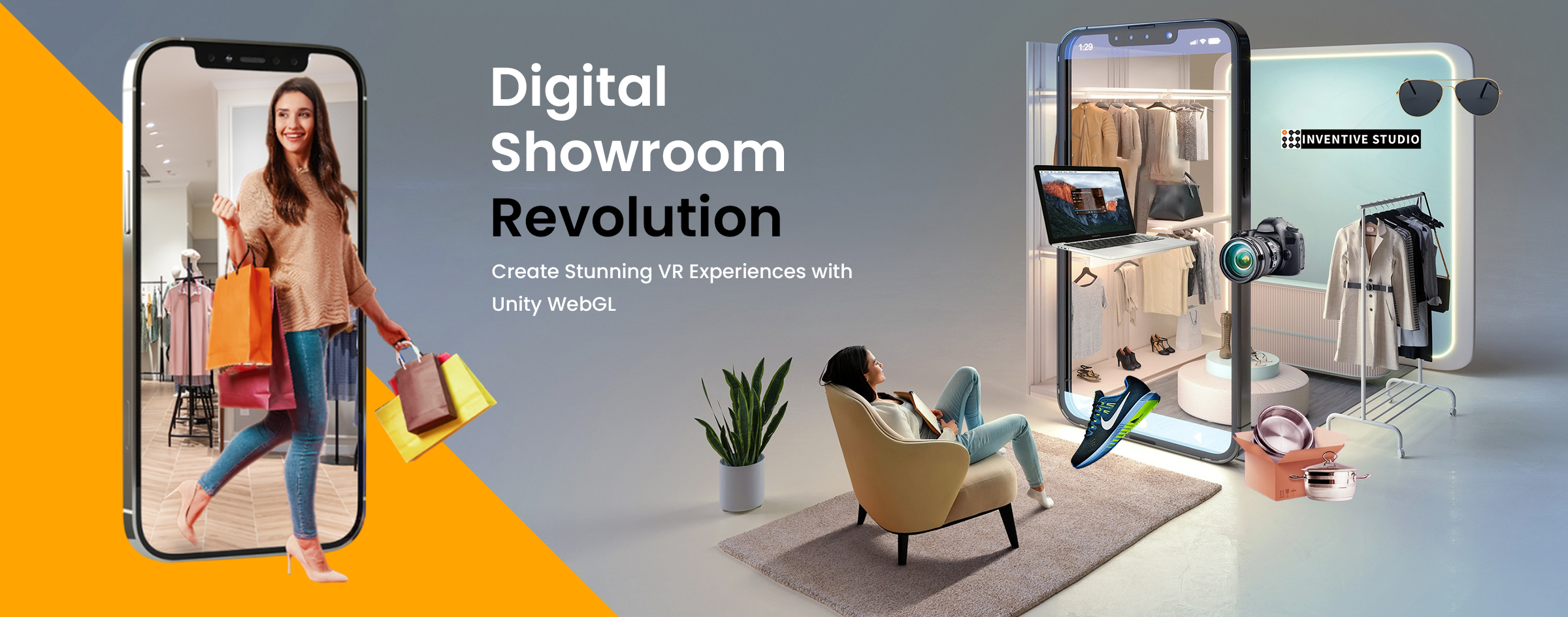
The retail industry is evolving rapidly, and by 2026, the traditional brick-and-mortar store will not be sufficient to attract the interest of today’s consumer. To remain competitive, retailers are turning to the Digital Showroom Revolution as their means of staying relevant. With Unity WebGL, anyone can create fully immersive 3D environments that can be used via a web browser, eliminating the need to download bulky applications. This means there is now no additional barrier (other than a mouse) for consumers to explore products offered by retailers from any device with a single click.
Why the Digital Showroom Revolution Matters for Your Brand
For many years, high-end virtual reality was considered out of reach for the average consumer, due primarily to the high cost of devices and the complicated electronic hardware needed for VR applications. Unity WebGL now provides a solution for developers and marketers as it enables access to high-fidelity 3D virtual spaces directly from retailers’ websites. This has resulted in an explosion of accessibility as users can now experience virtual showrooms for automobiles and/or luxury homes using just a basic smartphone or a low-cost laptop.
This shift offers huge perks for your business growth:
- Instant Gratification: Users enter your virtual world immediately through a simple URL link.
- Global Accessibility: You can showcase your entire inventory to anyone, anywhere, at any hour of the day.
- Reduced Overhead: You save significant capital on physical rent, electricity, and on-site staffing.
- Agile Marketing: You can swap out product colors, textures, or layouts in just a few seconds.
In addition, you should know that search engines (like Google) now give preference to interactive and engaging types of content, so if users spend time on your website and interact with your 3D environment, it will help you climb the rankings naturally. The use of a virtual showroom provides higher levels of engagement and keeps people engaged with your brand longer than a static image can. This increased “dwell time” is a powerful indicator to Google that your website is providing high-quality information.
Technical Mastery: Optimizing Unity WebGL for VR Success
Creating a visually stunning environment is only the beginning. For your virtual showroom to be successful, it needs to load quickly and operate smoothly. WebGL requires large amounts of both browser memory and GPU resources, so you need to properly optimize all assets used with your virtual showroom. If a website takes longer than a few seconds to load, users will generally leave. You want the end user’s experience to be fast and responsive.
Essential Optimization Tips for 3D Web Content
- Light Baking: Light baking saves processing power by not using the true real-time light calculations to make shadows, but rather ‘baking’ your shadows into your textures during development.
- Texture Compression: Use URP to compress textures so they remain small but still look great.
- Reduce Polygon Count: The simpler the model, the better the performance. Lots of detail is good, but having too much geometric detail will cause the browser to slow down, making your game lag.
- Use Addressables: Use the Unity Addressable Asset system to make sure you’re only loading the assets based on what the end user is viewing.
- Culling: Use occlusion culling to disable rendering when walls or floors block your view of the object.
By using the above technical suggestions, you create an easy journey for your customers to interact with virtual reality. High frame rate allows users to feel as though they’re in the real world, eliminating motion sickness. Your VR user base will find a stronger emotional connection to your products.
Humanizing the Virtual Experience: Beyond the Screen
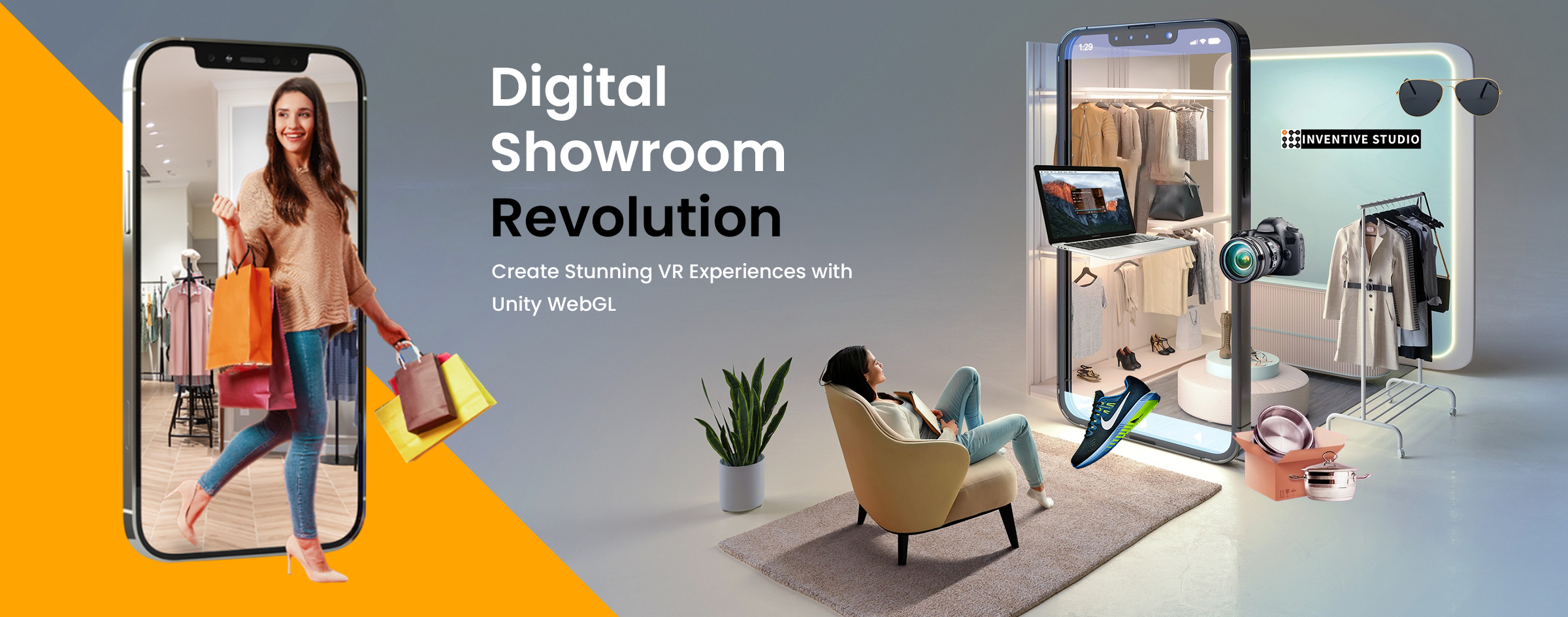
Creating a digital showroom is about much more than cool coding; there is a component of reflection back and forth between the user and the showroom to create a digital experience that feels real. When a person enters a 3D showroom, they should feel as though they are truly in the showroom. This takes careful planning of the sound design and user interface to ensure that both of these elements work well together and create an immersive 3D experience.
Creating a Narrative in a 3D Space
A great showroom tells a story. For example, if you are selling outdoor gear, place the user in a virtual mountain range. Let them hear the wind and see the campfire.
- Ambient Sound: Use spatial audio so sounds change as the user moves closer to an object.
- Guided Tours: Offer a “click-to-follow” path for users who are new to 3D navigation.
- Interactive Hotspots: Place small icons on products that trigger detailed info pop-ups or videos.
These small touches make the technology feel less like a tool and more like an adventure. When a user is having fun, they are much more likely to hit the “buy” button.
Winning the SEO Game with Immersive 3D Content
For the purpose of becoming a leader in the Digital Showroom Revolution, you must appear on the first page of a Google search. Virtual Reality Search Engine Optimization (VR SEO) is an increasing area of specialization. VR SEO includes more than the practice of simply putting keywords into a paragraph. It also includes how data is structured on your page, allowing an AI overview to summarize the content of your page successfully. With the launch of their most recent algorithm, Google’s focus is on providing “Helpful Content,” or content that answers a user’s need with a unique solution.
Advanced SEO Steps for 3D Showrooms
- Keyword Integration: Use H2 and H3 tags that naturally include your main focus keyphrase and related terms.
- Rich Snippets: Use Schema markup to tell Google that your page contains a “SoftwareApplication” or a “Product” tour.
- Descriptive Alt Text: Even though it is a 3D world, describe your 3D assets in the site’s HTML code. This helps AI bots “understand” what you are showing.
- Mobile-First Design: Ensure your WebGL user interface works perfectly on a small touchscreen.
- Global Delivery: Use a Content Delivery Network (CDN) to serve your heavy WebGL files from a server close to the user’s location.
You should also connect your showroom directly to the e-commerce checkout page. When a customer finds an item they would like to purchase in the virtual showroom, there should be a smooth transition from viewing the product to making a purchase. This will greatly help to reduce shopping cart abandonment and keep the customer in your ecosystem.
The Business Case: Why You Must Act Now
The competitive landscape is shifting toward “spatial” browsing. Many top-tier brands are already using the Digital Showroom Revolution to outpace their rivals. It gives your brand a modern, high-tech edge. Also, it builds deep consumer trust. When a customer can “inspect” a product in a 3D space, they feel much more confident in their purchase.
- Automotive Industry: Allow buyers to customize paint colors and sit in the driver’s seat from their own sofa.
- Home Decor: Let users see exactly how a new couch looks inside a digital twin of a modern living room.
- Luxury Real Estate: Sell high-end apartments before the foundation of the building is even poured.
- Fashion Houses: Create digital runways that allow fans to view new collections from every possible angle.
- Industrial Training: Use WebGL to teach workers how to use complex tools without any physical risk.
As a result, your brand stays far ahead of the curve. You are not just selling a static product; you are providing a memorable event. This leads to higher customer loyalty and better word-of-mouth marketing.
Conclusion: Join the 3D Movement
To summarize, the digital showroom revolution represents more than simply a trend; it’s the modern global standard for digital storytelling and online sales. With Unity, WebGL, you can make virtual reality (VR) easy and available to everyone. When writing, keep sentences brief and concisely expressed. Your files should be small in size and provide value as well as create quality content. By adhering to these guidelines, your site can achieve a good ranking, it will load quickly, and your customers will remain engaged with your website.
The web is no longer a flat surface. It is time to add depth to your brand’s digital presence.