The travel industry is changing faster than ever before. Traditional brochures and flat images no longer satisfy modern travelers. Instead, people want to experience a destination before they book their flight. This is where virtual reality travel trends come into play. By using immersive technology, brands can now transport potential guests to the other side of the world in seconds.
Recent data shows that many travelers feel more confident booking a trip after a VR experience. This happens because the technology removes the “fear of the unknown.” For example, a traveler can walk through a hotel suite or view a mountain peak from their living room. Consequently, they feel a stronger emotional bond with the location. Because of this connection, booking rates are rising across the globe.
How Virtual Reality Travel Trends Redefine the Customer Journey
The traditional path to booking a vacation is often long and complex. Customers usually spend hours reading reviews and looking at photos. However, VR simplifies this process by providing a “try before you buy” model. These virtual reality travel trends allow users to explore destinations with total clarity.
The Impact on Pre-Trip Inspiration
First, VR serves as a powerful tool for inspiration. Many travelers use headsets to narrow down their top choices. Specifically, they can visit multiple countries in one afternoon. This saves them time and reduces stress during the planning phase. Furthermore, travel agencies are using VR to upsell luxury packages. If a client can see the view from a private villa, they are more likely to pay for the upgrade.
- Immersive Previews: Users can explore 360-degree views of famous landmarks.
- Interactive Maps: VR allows travelers to learn the layout of a city before they arrive.
- Cultural Storytelling: Brands use VR to share the history and soul of a local community.
Because these experiences are so vivid, they stay in the mind much longer than a standard ad. Thus, VR is becoming the ultimate marketing weapon for tourism boards.
Why Virtual Reality Travel Trends Boost Conversion Rates
The main goal of any marketing strategy is to turn a viewer into a buyer. Fortunately, VR is excellent at achieving this. Research indicates that immersive content can increase direct bookings by a significant margin. This occurs because VR provides transparency. Travelers no longer have to worry about “catfishing” by hotels. They see exactly what they will get.
Building Trust Through Transparency
Trust is the most important factor in tourism. When a hotel offers a VR tour, they show that they have nothing to hide. Therefore, the guest feels more secure in their decision. Similarly, tour operators use VR to show the safety of adventure activities. For instance, a person afraid of heights might feel better after a virtual zip-line experience.
Moreover, VR helps eliminate language barriers. A visual tour is a universal language that everyone can understand. As a result, global brands can reach a wider audience without needing complex translations for every image. This makes the marketing process much more efficient and cost-effective.
Top Virtual Reality Travel Trends to Watch in 2026
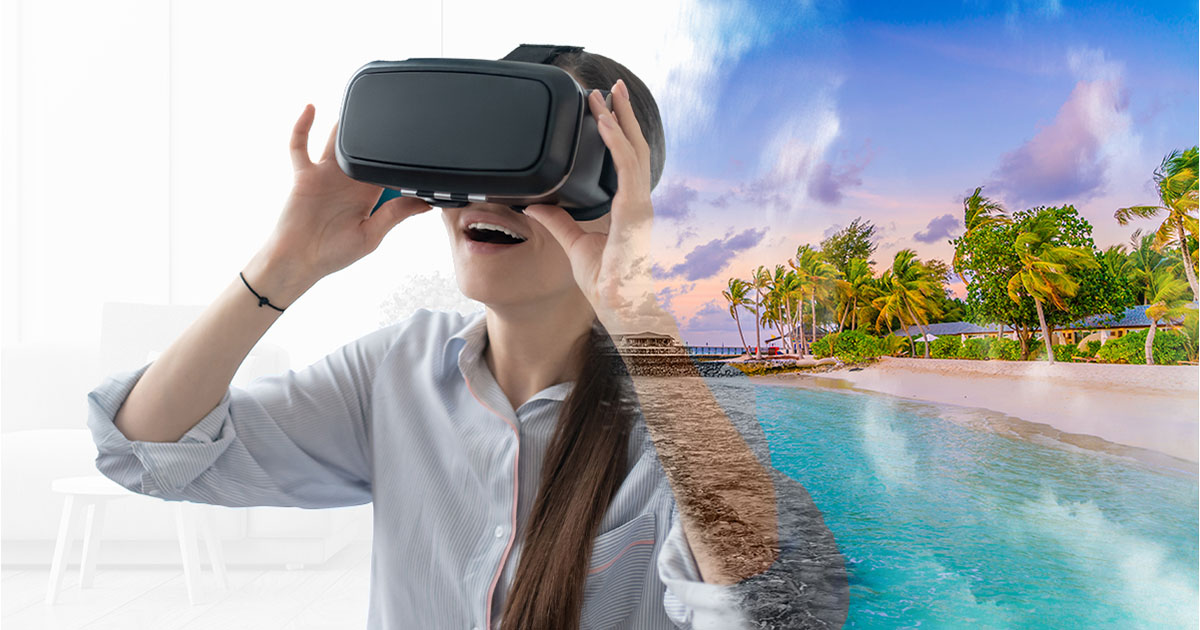
As we move through 2026, technology is becoming more accessible. We are seeing a shift from bulky headsets to sleek, mobile-friendly devices. Besides this, the content itself is becoming more social and interactive.
1. Metaverse Travel Agencies
In the near future, you will not just look at a website. You will walk into a digital office. In this space, an AI agent will guide you through different worlds. You can invite your friends to join you in the metaverse to pick a group destination. This makes the planning process a fun, social event.
2. Virtual Time Travel
Imagine visiting the ruins of Rome and seeing them as they were in their glory. VR is now being used to recreate historical sites. This trend adds massive value to heritage sites. It turns a simple walk into a deep educational journey. Because of this, schools and history buffs are becoming a huge new market for tourism.
3. Haptic Feedback and Sensory Marketing
The newest headsets now include haptic gloves. These allow you to “feel” the texture of sand or the spray of water. While this is still new, it is one of the most exciting virtual reality travel trends. By engaging more senses, brands can create a memory that feels 100% real.
Improving Brand Loyalty Through VR Experiences
One major hurdle in tourism is keeping a customer for life. Most travelers like to visit new places every year. However, VR can help build long-term loyalty. Brands can send “virtual postcards” to past guests. This keeps the destination fresh in their minds.
When a brand provides a high-quality VR experience, it shows they are innovators. People want to support companies that use the latest tech to make their lives easier. Moreover, the emotional link created by VR is very hard to break. Because the user “lived” the experience, they feel a sense of ownership over that destination.
Does VR Work for Budget Travel?
Many people think VR is only for luxury brands. Actually, that is not true. It is a great tool for budget travel, too. For example:
- Hostel Tours: Budget travelers can check the cleanliness of dorms.
- Public Transport Guides: VR can teach travelers how to use subways in a new city.
- Free Attractions: Cities can promote free parks and walks to attract low-spend visitors.
The Future of the Tourism Marketing Arena
The market for VR in tourism is growing at a rapid pace. This growth is driven by the need for deeper storytelling. Marketing experts are no longer just selling a bed and a flight. Instead, they are becoming “Experience Architects.”
As we look ahead, the goal is to make travel accessible to everyone. Even people who cannot travel physically can explore the world through VR. By focusing on inclusion and excitement, we are building a better future for the industry. Everyone can be an explorer in the digital age.
Final Thoughts on Virtual Reality Travel Trends
In conclusion, focusing on virtual reality travel trends is much more than a gimmick. It is a proven method to increase trust and joy in the booking process. By turning a static ad into a living adventure, we prepare the tourism industry for a digital future.
The future of marketing is not a flat screen. It is a vibrant, 3D world where the traveler is the star of the show. If you have not added VR to your marketing toolkit yet, now is the perfect time to start.