The gaming industry continues to evolve with new technology, and Web3 gaming is leading the next major shift. Web3 gaming combines blockchain technology with game development to create decentralized and player-focused experiences. Unlike traditional games, Web3 games give players more control over their assets and rewards. As a result, both developers and players are showing strong interest in this new approach. In this blog, we explain Web3 gaming in simple terms while also exploring its features, benefits, challenges, and future potential.
What Is Web3 Gaming?
Web3 gaming, also called blockchain gaming, uses blockchain networks to run game systems and digital economies. Instead of relying only on centralized servers, these games operate using decentralized infrastructure. Therefore, players gain more transparency and ownership. Players can own in-game assets as NFTs, and they can trade or transfer these assets outside the game environment. In addition, cryptocurrencies allow players to earn rewards through gameplay. Because of these features, Web3 gaming creates a new model where digital items hold real value.
Key characteristics of Web3 gaming include:
Digital ownership through NFTs
Token-based game economies
Transparent blockchain transactions
Core Features of Web3 Gaming
Web3 gaming introduces several innovations that change how players interact with games and digital assets.
True Digital Ownership
In Web3 games, players own their in-game items through NFTs recorded on the blockchain. This means players can sell, trade, or transfer their assets independently. Therefore, digital ownership becomes secure and verifiable.
Decentralized Game Economies
Blockchain technology allows developers to create token-based economies inside games. Players earn tokens by completing tasks or participating in gameplay activities. Later, they can trade or use these tokens across supported platforms. As a result, games become more engaging and reward-driven.
Interoperability Across Platforms
Some Web3 projects aim to allow assets to work across multiple games or ecosystems. For example, a character or item earned in one game may also appear in another compatible platform. Although this concept is still developing, it shows strong future potential.
Transparency and Security
Blockchain records all transactions publicly and securely. Therefore, players can verify ownership and transaction history easily. This reduces fraud while also increasing trust within gaming communities.
Growth of Web3 Gaming Platforms
Web3 gaming has grown rapidly over the past few years. According to DappRadar, blockchain gaming continues to attract strong investment and user engagement. In addition, millions of users now interact with Web3 gaming platforms each month. Popular projects such as Axie Infinity and Decentraland helped introduce play-to-earn models to global audiences. Because of this growth, more developers are exploring Web3 game development opportunities.
Major growth drivers include:
Increasing NFT adoption
Expansion of play-to-earn models
Rising blockchain investments
Key Features of Web3 Gaming Platforms
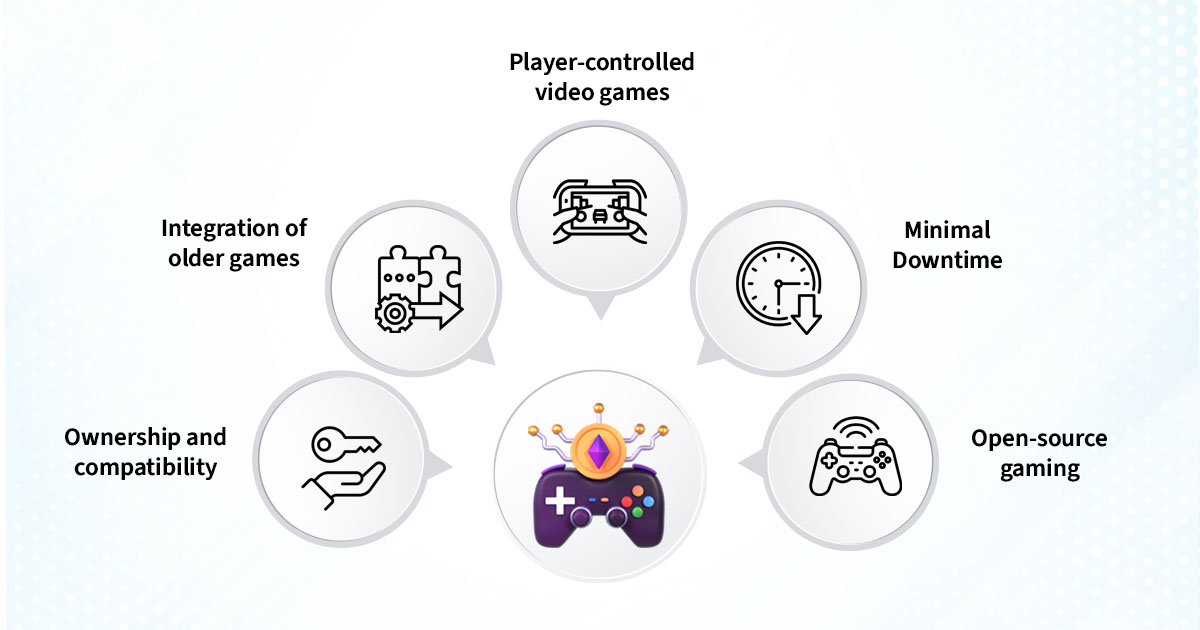
Web3 platforms include technical and community-driven features that improve engagement and transparency.
Player-Controlled Governance
Many Web3 games use decentralized governance systems where players vote on updates and features. As a result, communities actively participate in game development decisions.
User-Generated Content
Players can create assets, game levels, or modifications within some Web3 ecosystems. In many cases, platforms reward creators using tokens. Therefore, creativity and engagement continue to increase.
Continuous Availability
Decentralized networks reduce dependency on single servers. Even if some nodes fail, the system continues running. This improves reliability compared to traditional server-based games.
Open Development Ecosystems
Some Web3 projects provide open-source access to their systems. Developers can review and improve game mechanics. As a result, innovation and collaboration grow faster.
Key Innovations Driving Web3 Gaming
Several modern trends are shaping the direction of Web3 gaming and blockchain-based experiences. Play-to-earn models allow players to earn tokens through gameplay participation. Therefore, gaming becomes both entertainment and a potential income source. Web3 gaming also connects strongly with shared virtual environments where players can interact and trade assets across platforms. In addition, NFT-based economies allow developers to create unique digital collectibles such as skins, characters, and virtual assets.
Important innovation areas include:
Play-to-earn (P2E) mechanics
Metaverse-based experiences
NFT-driven asset systems
Challenges in Web3 Gaming
Although Web3 gaming offers many advantages, several challenges still exist. Some blockchain networks face performance limitations during high transaction volumes, which may increase transaction costs. In addition, new users often find crypto wallets difficult to understand. Regulatory frameworks for blockchain and NFTs are also evolving, which requires continuous compliance monitoring.
Key challenges include:
Scalability limitations
Complex onboarding processes
Regulatory uncertainty
Future of Web3 Gaming
Web3 gaming is still developing, yet its growth continues steadily. As blockchain technology improves, Web3 games will become faster and more accessible. In addition, many studios are exploring hybrid models that combine traditional gameplay with blockchain features. Therefore, future gaming ecosystems will likely include both centralized and decentralized systems working together. Web3 gaming is no longer only about playing games; it is also about ownership, participation, and digital economies.
Conclusion
Web3 gaming represents a major shift in the gaming industry by introducing ownership, transparency, and new reward models. Although challenges remain, technology improvements continue to support adoption. As a result, Web3 gaming will likely become more mainstream in the coming years. Developers who adopt these technologies early can build innovative and future-ready gaming experiences.
Why Consider Inventive Studio for Web3 Gaming Development?
Choosing the right development partner is important in the fast-growing Web3 ecosystem. Inventive Studio offers experienced blockchain and game developers who specialize in scalable and performance-driven solutions. Our team works across Unity, Unreal Engine, AR, VR, and advanced blockchain frameworks to deliver end-to-end Web3 gaming solutions.